Late last year, I quit watching telly for a month.
It was partly an experiment in self-control and habit-breaking, but also a response to the unhappy realisation that watching shows had become my crutch to zone out.
So, I decided to kick the habit for a bit, cold turkey.
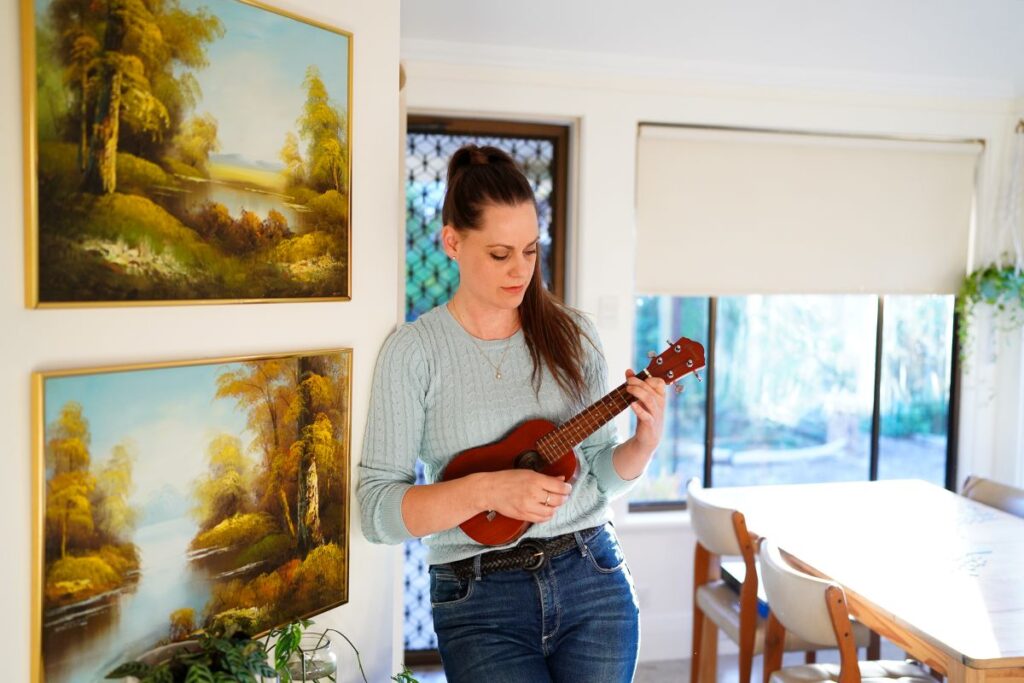
For my latest ABC Lifestyle story, I explored what I learned from this month-long experiment, including the surprising things that slotted into TV’s place — things I’d often felt too tired for, such as playing music, doing puzzles, exercising, gardening, and heaps more reading.
To help make my month-long TV detox a success, I focused on:
- A two-fold approach to shifting unhealthy habits: make the old habit harder and keep a healthier option waiting in the wings.
- Using ‘toward and away’ moves: rather than calling behaviours “good” or “bad”, I started asking whether they moved me toward the life I wanted or away from discomfort.
- Creating a ‘Library of Rest’, modelled on ‘spoon theory’: categorising alternatives to TV by the energy and capacity levels they required, so I could find doable ways to rest, no matter how worn out I was feeling.
- Using permaculture to understand the itch to binge-watch TV: applying the principle “apply self-regulation and accept feedback”, I realised I often resort to TV when I’m overloaded or off-kilter and need more rest.
While I don’t plan to remove my television entirely, I now approach it as more of a conscious choice — a treat, even — rather than a daily fallback habit that eats precious hours of my life.
Ultimately, the experiment reminded me that time is my most finite resource and richest form of wealth, and that a more fulfilling life begins with mindfully choosing how I spend it.
This story is part of a regular column I write for the ABC, one of Australia’s most-read news websites. You can browse my full story archive here.
Share this with your mates
About the Author: Koren Helbig

About the Author: Koren Helbig