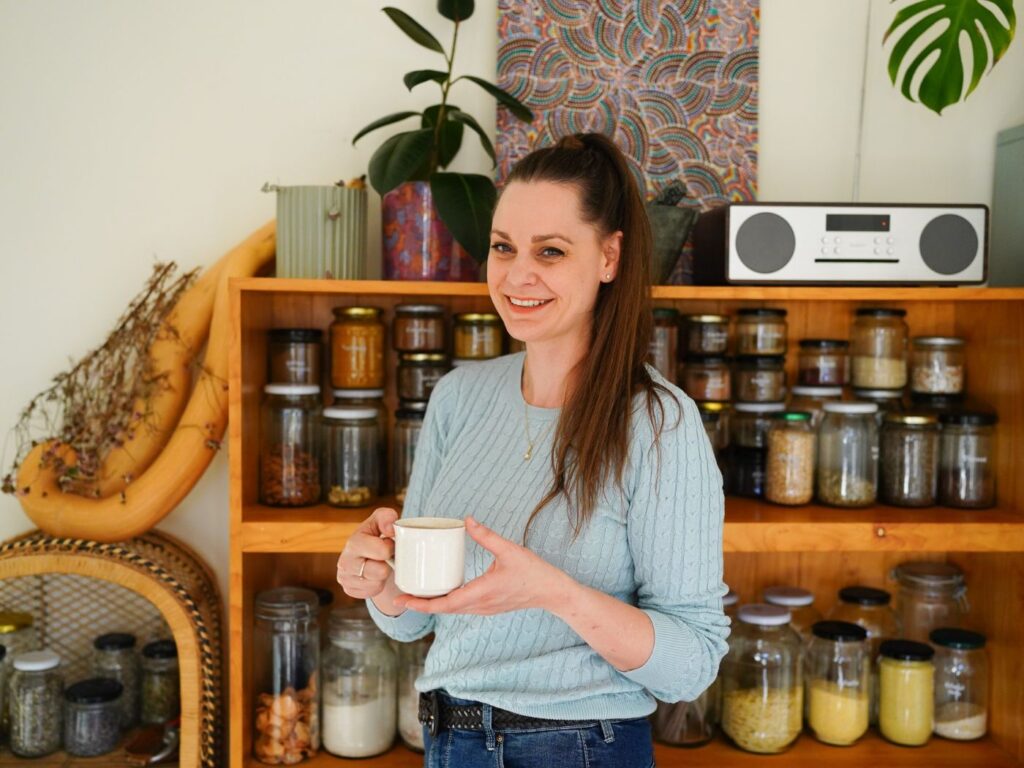
Living alone, it’s far too easy for me to slide into takeaway or toast-for-dinner mode — especially on low-energy days when even simple tasks feel like an uphill battle.
While that’s OK sometimes, too many fast-food or snack-based dinners aren’t great for my health or wallet, and create a lot of food and packaging waste.
To make things easier, I’ve developed simple storage and cooking systems that keep food visible and fresh while ensuring I use things up.
For my latest ABC Lifestyle story, I shared how I used permaculture design to make cooking for one feel more doable, affordable and lower-impact.
Recipes-for-one and other key approaches
Cooking strategies
- I aim to make two big one-pot meals a week and immediately freeze at least one serve of each, so I always have easy frozen meals ready to go.
- In the mornings, when my brain is fresh, I decide what I’ll eat that night — perhaps defrosting something during the day so dinner becomes a four-minute microwave reheat job.
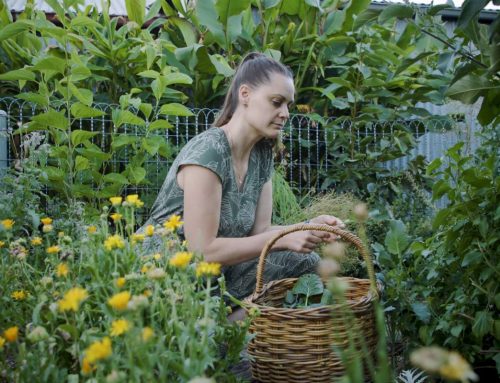
- For very basic meals, such as baked beans or two-minute noodles, I’ll look for no-effort ways to add veggies or extra protein — maybe an egg and a few spinach or kale leaves fresh-picked from my backyard permaculture garden.
Food storage strategies
- I keep my pantry well-stocked with bulk cooking-from-scratch ingredients, stored well to prolong their life in big old pickle jars or secondhand airtight containers.
- To avoid over-buying, I use a free app to collate a digital shopping list on my phone, adding things as they run out so I never have to remember what needs restocking.
- I aim to visit the supermarket only once a week or fortnight, and only buy things I need.
- I also aim to ‘produce no waste‘ by giving food scraps a second life: in batches of stock or food-scrap bone broth made in the slow cooker.
Food sourcing strategies
Embracing the permaculture principle ‘use and value diversity’, I’ve started viewing supermarkets as a last resort after lower-impact and more affordable options such as:
- Growing food in my small city garden, especially cut-and-come-again leafy greens, lettuces and fresh herbs that would spoil easily in store-bought bags.
- Swapping with fellow food-growing friends or neighbours — some suburbs even offer organised community food swaps.
- Shopping for pantry staples at a discount warehouse that sells food near its use-by date at massively reduced prices.
- Bin diving at my local supermarket.
- Buying grass-fed meat from local small-scale regenerative farmers (eating predominantly vegetarian means I can afford the odd better-quality meat dish).
This story is part of a regular column I write for the ABC, one of Australia’s most-read news websites. You can browse my full story archive here.
Share this with your mates
About the Author: Koren Helbig

About the Author: Koren Helbig