Keen to get into foraging South Australia? Fabulous. From edible weeds to wild mushrooms, free food is growing all around us — you just need to know where and what to look for.
Learning the skills to safely identify and harvest wild plants is fun, practical, very delicious and a beautiful way to deeply connect with the seasons and landscapes near you.
And here in South Australia, we’re lucky to have some incredible foraging guides ready to share their wisdom.
Or, you can start learning right away with my on-demand online workshop, Foraging in Australia: A Beginner’s Guide to Common Edible Weeds & Wild Foods.
But why even bother foraging?
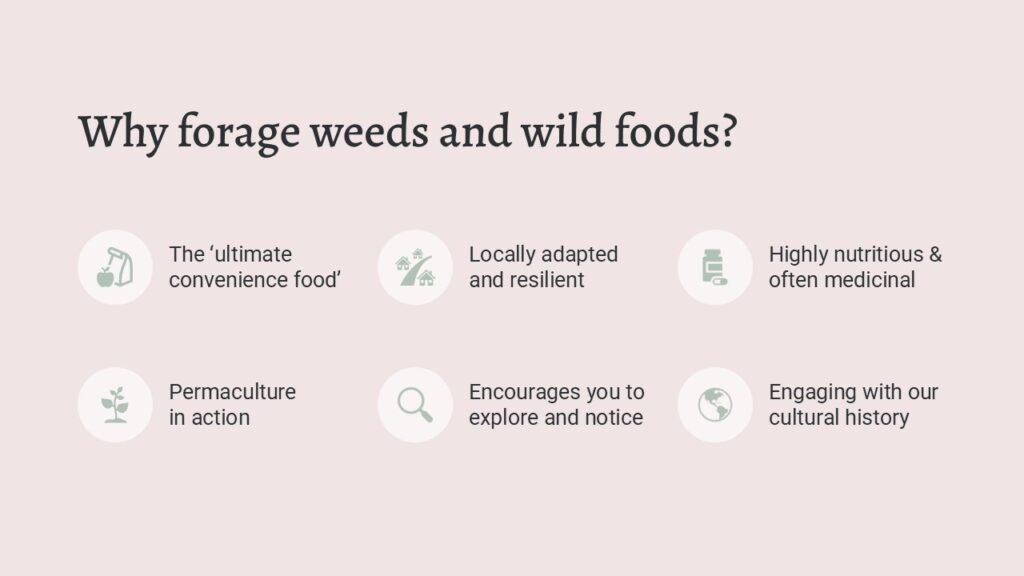
Um, lots of reasons! Weeds and wild foods are usually locally adapted, resilient to weather extremes and often highly nutritious or medicinal.
They’re also the ultimate convenience food, growing in a living pantry.
As Diego Bonetto writes in his excellent book, Eat Weeds: “They ask of you no money, no search for a parking space at the supermarket, no planting, no watering or any other maintenance whatsoever.”
And foraging is a brilliant way to put permaculture into practice, allowing you to play with key principles such as Obtain a Yield, Use Edges and Value the Marginal, Observe and Interact and Produce No Waste. (You can find more info on the 12 permaculture design principles here).
Time to stop poisoning weeds and start eating them, yeah?
8 foraging South Australia experts to learn with
Learning to correctly identify wild plants is absolutely critical when it comes to safely foraging food to eat. Always follow the cardinal rule: if in doubt, go without.
Nothing beats learning alongside a knowledgeable guide, where you can see, taste, touch and smell plants in real life — a brilliant way to cement crucial info in your brain.
I’m often asked for advice on foraging experts in Adelaide and South Australia, so I’ve collated this “top 8” list for you. These local legends often run workshops on identifying, cooking and eating weeds, mushrooms and other wild foods.
But this list is by no means exhaustive — feel free to nominate yourself or others in the comments.
1. Neville Bonney
Neville is a South Australian native plant expert, ethnobotanist and author of many excellent books on native South Australian plants. He’s an absolute powerhouse of knowledge, and a sought-after speaker on seed collection, local plant identification and traditional uses for native species.
Neville also isn’t active on social media, but if you see his name attached to a workshop or spot his books for sale, snap them up fast.
2. Kate Grigg, the Wild Food Huntress
Kate is one of the best-known foraging South Australia experts. She curates the excellent Wild Food Huntress website, which has loads of useful information on edible weeds, mushrooms and other plants. She also hosts regular outdoor foraging workshops and guided walks, often in the Adelaide Hills. On top of all that, Kate is the creator of two helpful Facebook groups, Foraging Australia and Mushroom Foragers of South Australia.
Website: wildfoodhuntress.com.au | Instagram: @TheWildFoodHuntress
3. Jacqui Garcia, Forage School
Jacqui is a dear friend of mine and is affectionately known in my friendship circle as ‘the plant oracle’. She’s deeply knowledgeable about wild foods, edible native Australian foods, medicinal plants and organic gardening. She hosts occasional foraging Adelaide workshops and guided walks for adults, and is also the founder of Forage School, regularly hosting foraging workshops for children aged 5 to 12 years.
Instagram: @EdibleAdelaide, @Forage.School
4. Malcolm Haines, Ligaya Garden
Malcolm is a self-taught forager and co-creator of Ligaya Garden, a suburban permaculture project on a small 360sqm block in South Gawler. He regularly runs engaging mushroom and edible weed walks, helping locals confidently identify common wild fungi and plants, plus how to prepare them safely and make yum foraged meals. Malcom also runs the Gawler Kitchen Herbalists Facebook group, which often discusses foraging South Australia matters.
Website: ligayagarden.online/foraging | Instagram: @LigayaGarden
5. Kym Ormond
Kym is a permaculturist, trained chef and community educator who teaches practical skills in food preserving, permaculture gardening and, occasionally, foraging. He works with councils, schools and community groups to help people connect with their local environment and food systems. (Side note: Kym is also the co-owner of the brilliant indie permaculture plant nursery, Nomad Nursery.)
Website: kymormond.com.au | Instagram: @kym.ormond
6. Koren Helbig (ahem, that’s me!)
I’m an urban permaculturist (and also an ethical marketing consultant and journalist), so my jam is foraging edible weeds in city spaces. I teach Foraging in Australia: A Beginner’s Guide to Common Edible Weeds & Wild Foods — a one-hour online workshop sharing practical skills to help you confidently identify, cook and eat common edible plants that grow across urban Adelaide and throughout southern Australia. It’s also one of my favourite workshops to teach in person; please get in touch if you’d like me to present at your event or community group meeting.
Website: korenhelbig.com | Instagram: @koren.helbig
7. Steven Hoepfner
Steven is a good mate of mine, but I promise I’m not biased when I call him one of South Australia’s most respected food growers. He co-founded Wagtail Urban Farm, a microscale market garden in suburban Adelaide that thrived for more than a decade (sadly, it is now closed after the property was sold). Steven is passionate about native food plants and still occasionally runs workshops on edible weeds, bush foods and medicinal plants.
Instagram: @WagtailUrbanFarm
8. Rosie Morison
If you’re into foraging mushrooms, Rosie is your go-to. In autumn, when many wild fungi species appear in South Australian forests and parks, Rosie hosts outdoor wild mushroom foraging workshops in the Adelaide Hills. She also takes newbie mushroom foragers on guided walk-and-talks.
Instagram: @rosie_in_the_hills
+ Vale, Bev Lane
Bev was a South Australian herbalist and botanist with a wealth of knowledge on herbs and Australian native bush tucker foods. She had a background in science and taught bushcraft survival skills, wild foods, plant dyeing and medicinal plant use. On top of all that, Bev was a healer, a Bard and a published poet.
Bev passed away in April 2024, but her impact on the South Australian herbalism and plant community is immense. She is missed and fondly remembered by many, and this list wouldn’t feel complete without acknowledging the incredible legacy she has left behind.
Best foraging books (in my humble opinion)
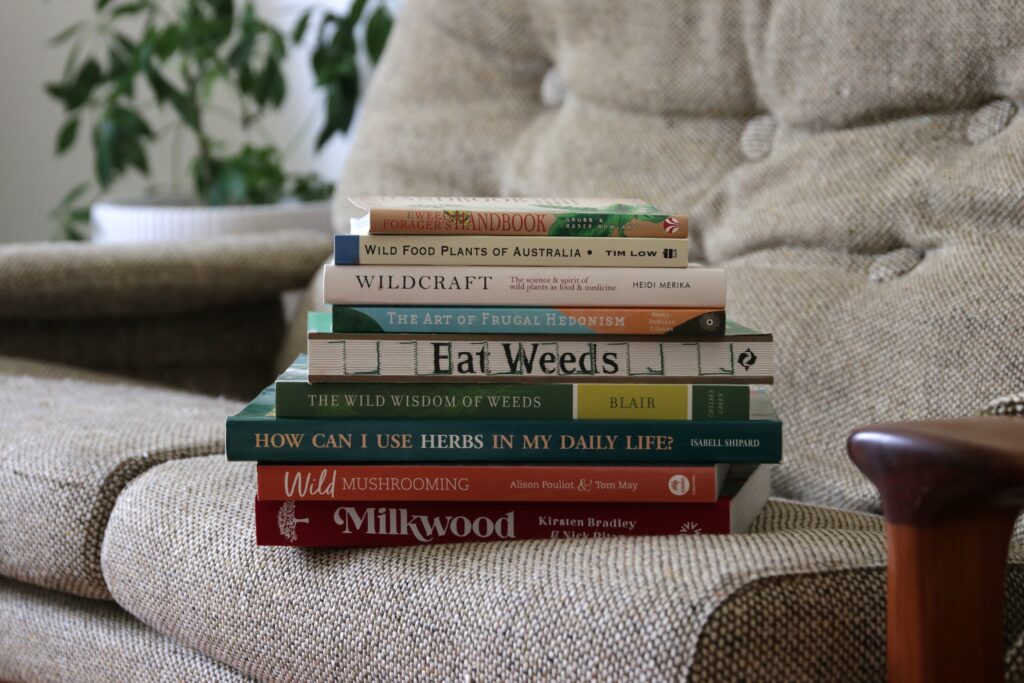
Nothing beats in-person learning when it comes to foraging, but books can take you a long way in understanding more about the wild plants growing all around us.
So, here’s a list of my favourite foraging books, the ones I refer to again and again.
They’re packed with practical, easy-to-understand advice for identifying, harvesting, cooking and eating foraged foods that commonly grow wild in South Australia and across southern Australia.
- Eat Weeds, Diego Bonetto
- The Weed Forager’s Handbook, Adam Grubb & Annie Raser Rowland
- The Wild Wisdom of Weeds, Katrina Blair
- Wildcraft: The Science and Spirit of Wild Plants as Food and Medicine, Heidi Merika
- How Can I Use Herbs In My Daily Life? , Isabell Shipard
- Milkwood: Real Skills for Down to Earth Living (Seaweed & Wild Food chapters), Kirsten Bradley
- Wild Food Plants of Australia, Tim Low
- Knowing, Growing and Eating Edible Wild Native Plants for Southern Australia, Neville Bonney
- Wild Mushrooming: A Guide for Foragers, Alison Pouliot & Tom May
- The Wondrous World of Weeds, Pat Collins
- First Nations Food Companion Cookbook, Damien Coulthard & Rebecca Sullivan (South Aussie authors!)
- Wild Remedies – How to Forage Healing Foods and Craft Your Own Herbal Medicine, Emily Han & Rosalee de la Forêt
- The Art of Frugal Hedonism, Adam Grubb & Annie Raser Rowland
Any local foraging experts or great foraging books you’d add?
If you know of other foraging South Australia experts or brilliant foraging books, please drop their details (or nominate yourself) in the comments.
I’d love to keep growing this list as a community resource that collectively helps us South Aussies connect with and learn from our local knowledge-keepers.
Get started with my online ‘intro to foraging’ workshop
If you’re keen to start building your foraging knowledge but can’t make it to an in-person workshop, take a gander at my online workshop, Foraging in Australia: A Beginner’s Guide to Common Edible Weeds & Wild Foods.
This one-hour intro teaches you how to safely identify, harvest and cook with some of the most common edible plants found across southern Australian backyards, parks and nature strips. Perfect for total beginners, and applicable for anyone living in South Australia, New South Wales, Victoria, Tasmania and the bottom bit of Western Australia.
Related foraging South Australia resources
- Learn how to pick and cure your own foraged olives, the traditional Sicilian way (one of my most popular blogs of all time)
- Explore all of my blog posts about foraged weeds + wild food
- Check out the South Australian Native Food Association
- Consider joining these two helpful Facebook groups: Foraging Australia and Mushroom Foragers of South Australia
Share this with your mates
About the Author: Koren Helbig

About the Author: Koren Helbig