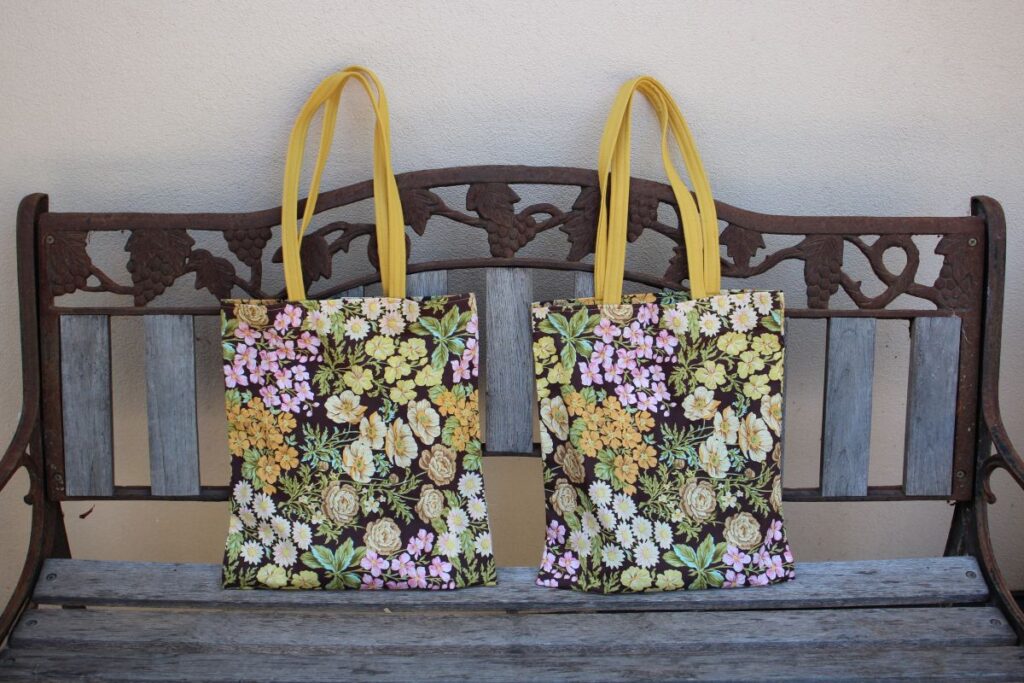
Learning how to make a tote bag is surprisingly easy, even for a beginner or a sometimes-sewer (like me).
And homemade reusable grocery bags are a great alternative to “green” bags sold at supermarkets, which actually aren’t environmentally friendly at all – they’re most often made of polypropylene, a type of plastic derived from petroleum.
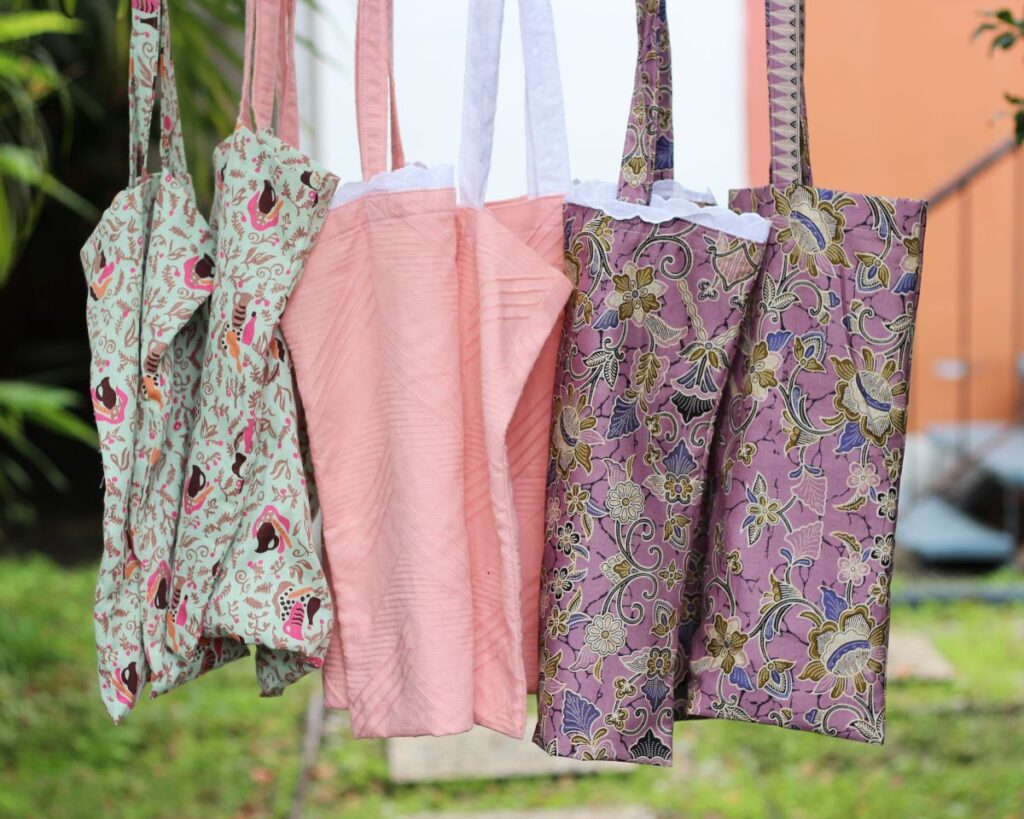
Instead, I’ve taken to fossicking up vintage fabric, material scraps and even old t-shirts and tablecloths from secondhand stores and thrift shops, then turning them into homemade shoulder tote bags.
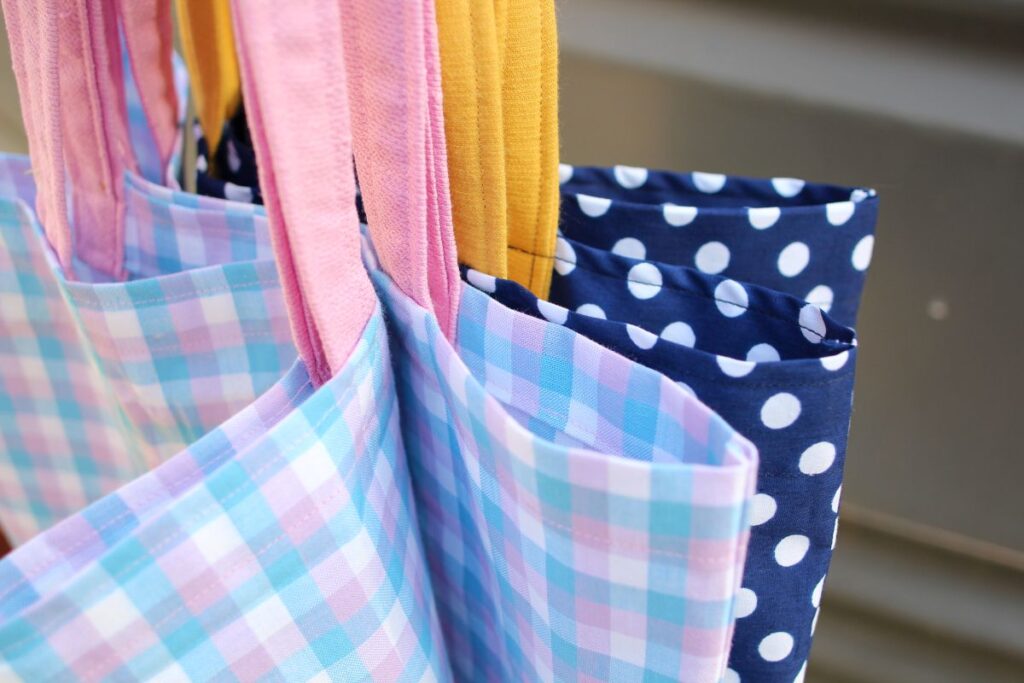
Such material costs just a couple of dollars, a cheap way to score some seriously fun and colourful patterns and designs. Take a look at these, for example:
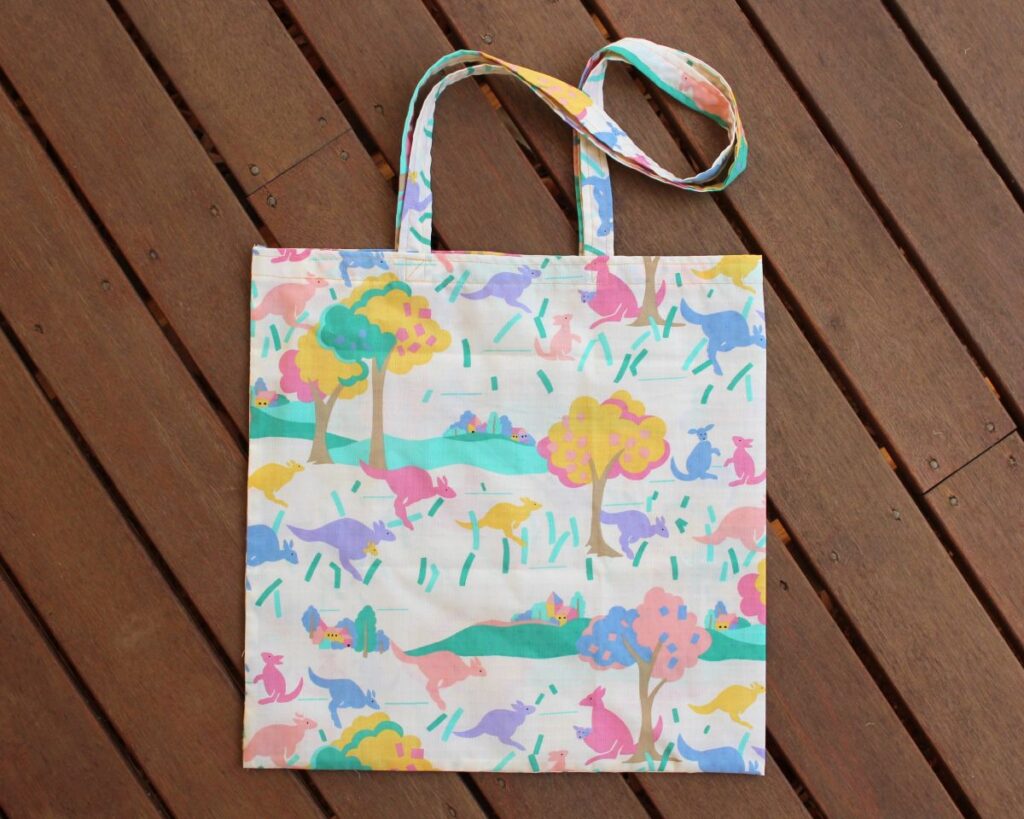
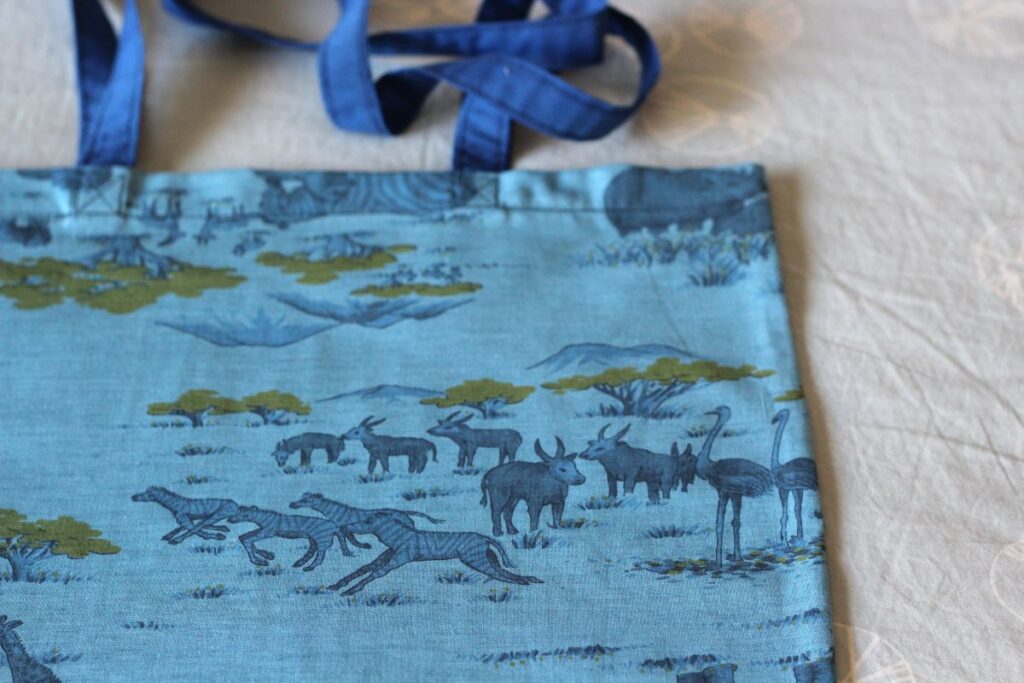
Plus, using recycled material is a beautiful way to practically apply the permaculture principle, produce no waste.
I keep a stack of these homemade shoulder totes in the car as reusable grocery bags and for all kinds of shopping.
I also love that you can easily throw them in the washing machine for a quick clean when they get a bit grubby.
So, let’s walk through my tried-and-true pattern for a tote bag with shoulder strap, made from secondhand or vintage fabric.
Why make your own reusable tote bag?
- Polypropylene “green” bags require many hundreds of uses to offset their production footprint, and most get binned long before then.
- Polypropylene isn’t biodegradable, and so breaks down into harmful microplastics that contaminate soil and marine ecosystems.
- Secondhand material or scrap fabric closes a waste loop, giving something a second life rather than entering landfill.
- A handmade bag is repairable: a broken strap or worn seam can often be easily fixed to extend its life.
- Making things yourself builds skills and reduces reliance on disposable consumer goods — and it’s pretty fun, too.
What you’ll need
- Fabric: About 1 square metre of medium-weight fabric — cotton or canvas works well. Op-shop finds are perfect.
- Scissors or a rotary cutter
- A sewing machine
- Thread — cotton is best
- A tape measure and pins
- An iron
How to make a tote bag
Step 1: Cut your material
Before you do anything else, cut your tote bag fabric to size:
- Body: one piece*, 86cm × 39cm
- Straps: two pieces, each 79cm × 8cm
*I cut the body as one long piece rather than two halves, as folding it creates the bottom edge automatically, which means one less thing to sew. But if your fabric size and shape don’t allow for this, you can cut two pieces, 42cm x 39cm each.
Step 2: Make the straps
Take each strap piece and fold both long edges inward equally toward the centre.
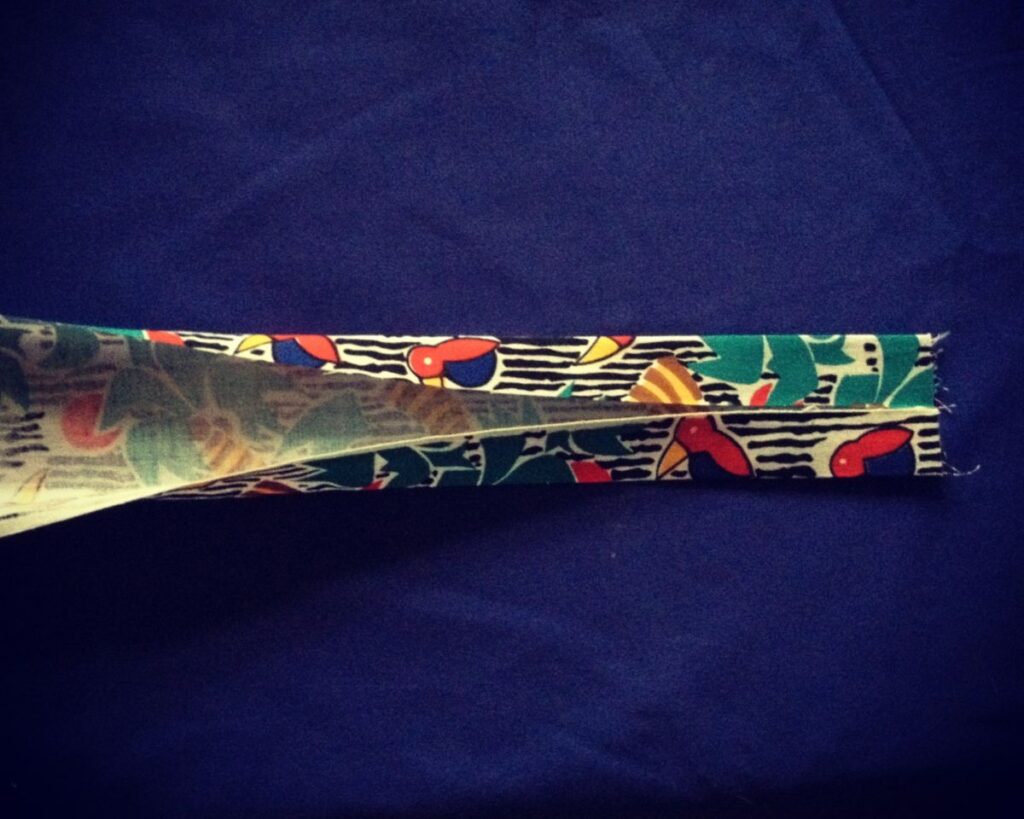
Then fold the whole strip in half again lengthwise so all the raw edges are tucked inside and hidden. Press with a hot iron to hold everything flat. You can also pin if necessary.
Sew two lines of straight stitches down each long edge of each strap to seal them together and provide strength.
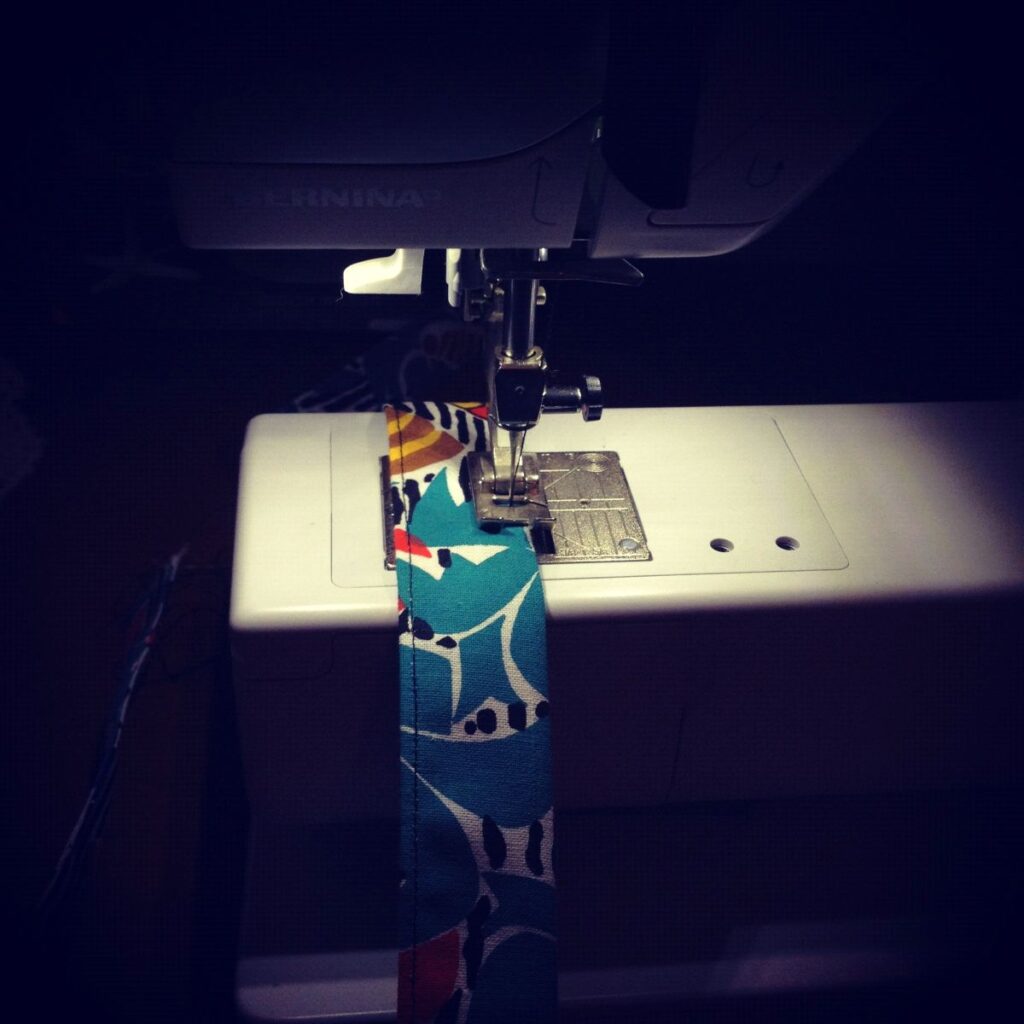
Lay the straps down beside one another and trim the edges straight, ensuring the two straps are exactly the same size.
Step 3: Create the top hem
Next, prepare the top of your tote bag for adding the straps. On each side, fold over a hem (about 1cm) along the top edge and press flat with a hot iron. Then, fold the same edge over a second time (again, about 1cm) and iron again.
This creates both the top hem that will give your shoulder tote bag a clean and structured opening, and a spot to slide the straps under and sew in place.
Step 4: Attach the straps
Take one strap and one top edge. Slide the two strap ends under the hem you’ve just created.
You can use a tape measure to ensure it all lines up nicely when completed — position each strap end 11cm from the body material edge, with about 12cm between the two straps on the same side. Use pins to hold each strap in place before you sew — they shift around otherwise.
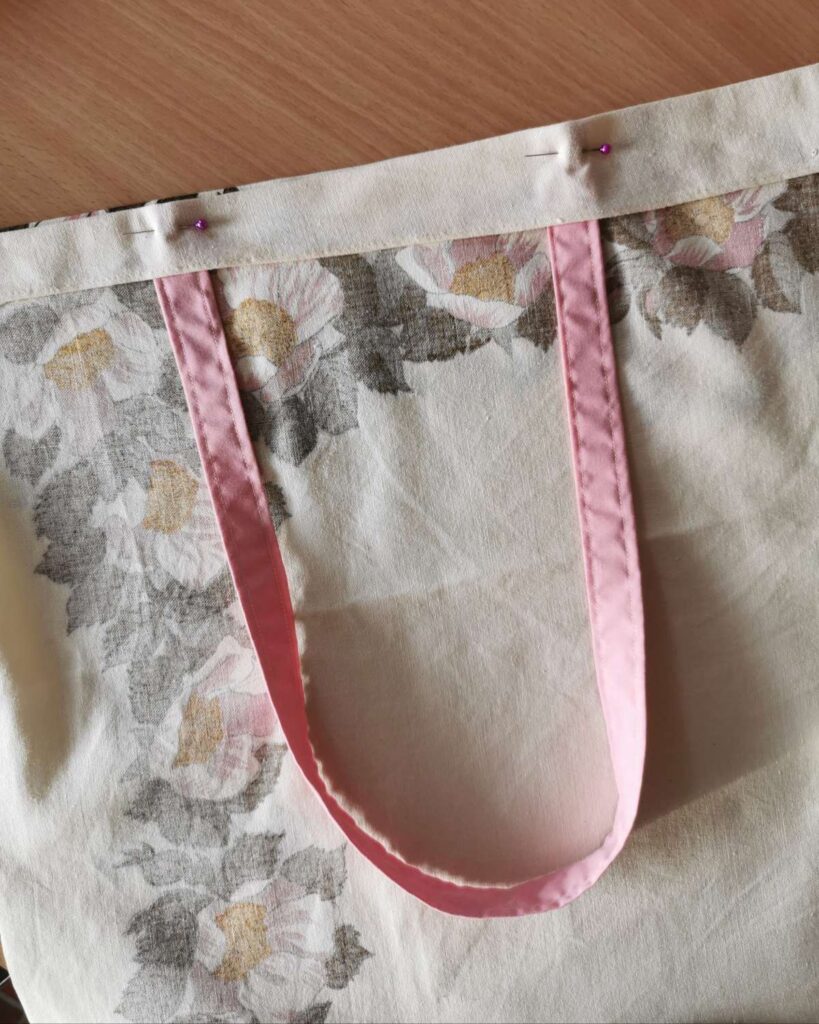
Repeat this process with the second strap on the other top edge.
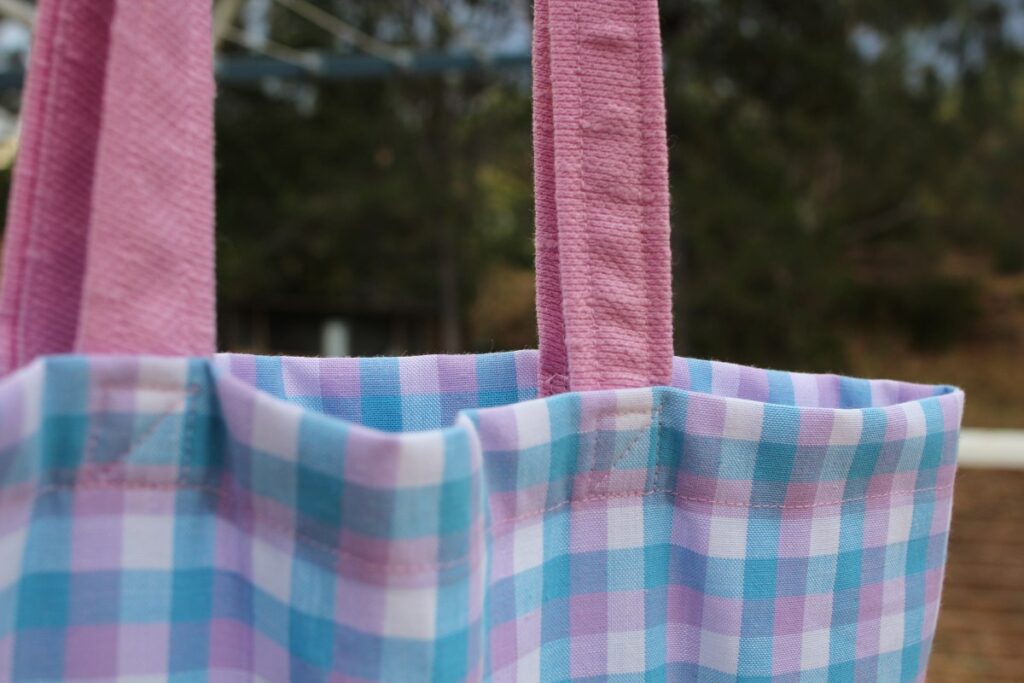
Now it’s time to sew. Attach each end with a box stitch (a small rectangle), then sew an X through the middle for strength. Go slowly here. This stitching will always be visible, so it’s worth taking your time.
For perfect corners when sewing the box on the straps (or anytime you want to execute a sharp turn), keep the needle down and lift up the presser foot, then swing the fabric 90 degrees, put the presser foot back down and carry on sewing in the new direction.
Finally, sew one line of straight stitches across the entire top hem on each side, holding everything together.
Step 5: Prepare the body
Now we’re ready to sew the tote bag together.
Fold the body piece in half, straps at the top and with the right side (the pattern side) facing out. That fold becomes the base of the tote bag.
(If you’ve needed to cut your material into two body pieces, lay them together, pattern-side facing out, with the straps at the top.)
Press it flat with a hot iron and pin it in place.
Step 6: Sew it all together using French seams
Sewing your tote bag up using a French seam creates a clean finish, without the need for an overlocker. This means no raw edges that risk fraying over time, so your reusable bag stays strong.
It does feel pretty strange the first time, because you first place the wrong side (non-patterned side) of the fabric pieces together, which is totally opposite of what you would do for a normal seam. But it creates a really professional and clean end result, promise.
So, with the fabric right-sides out (ie, the pattern side facing out), sew a narrow seam of about 6mm down the left and right sides of your tote bag.
Now turn the bag inside out, press those side seams flat with an iron, and sew a second seam (about 1cm) down each side — this encases all the raw edges inside.
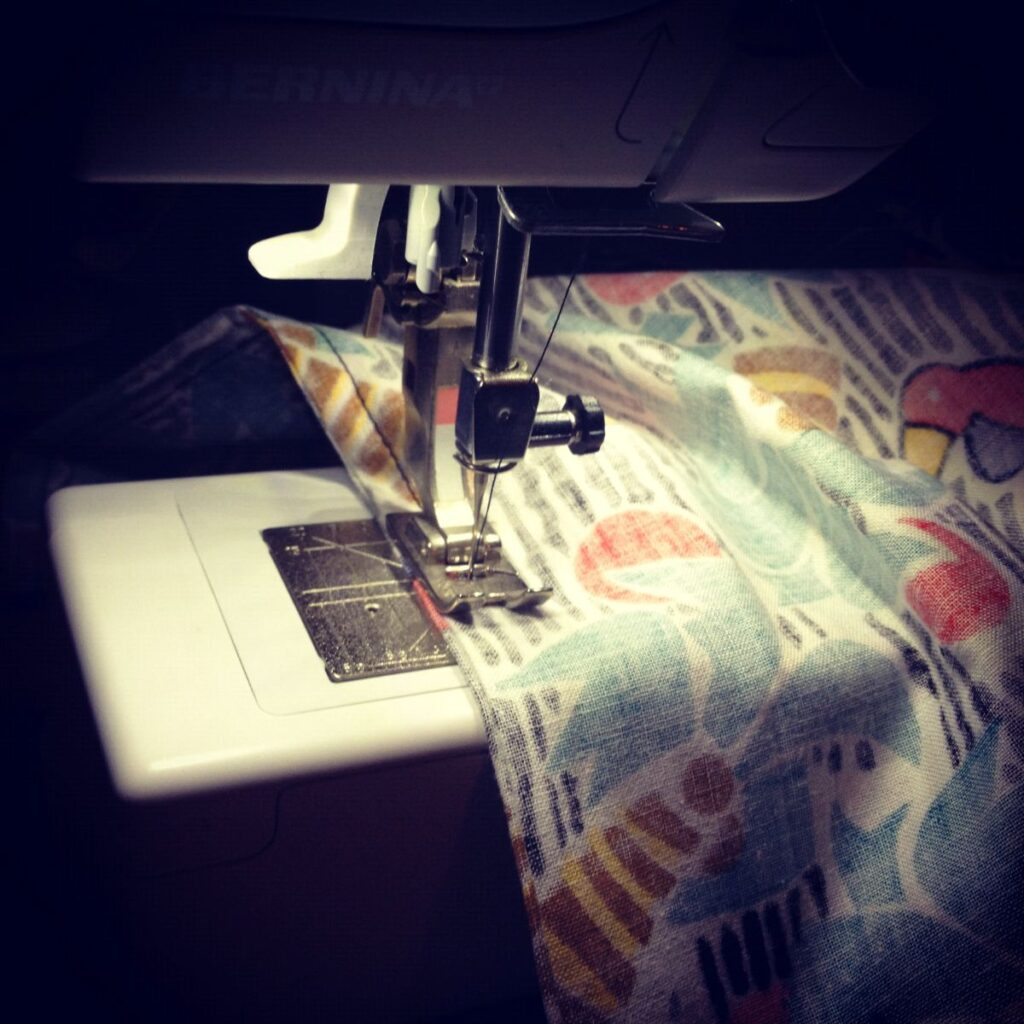
Turn it right-side out again, give everything one last press with the iron, and you’re done.
A few extra things I learned along the way
Finishing thread ends: For a really neat finish, pull both ends of the thread to one side, tie a double-knot by hand and trim the excess cotton. This is especially important when sewing the box and cross on the straps, as your work will always be visible.
Press as you go: Ironing over the stitches after each section of sewing really helps to settle the piece and keep the edges crisp.
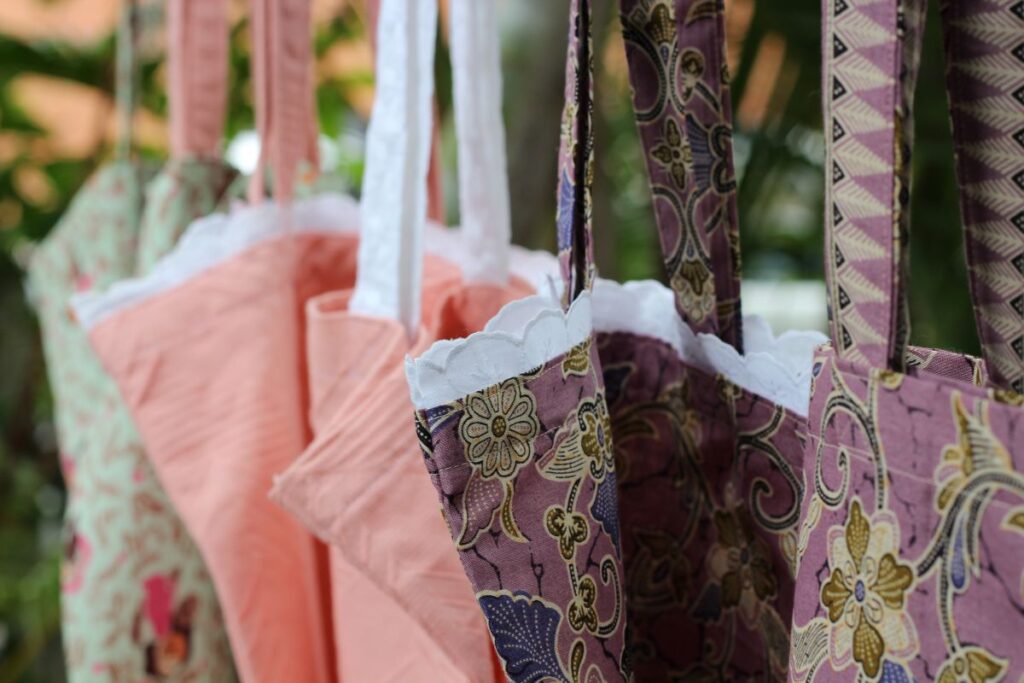
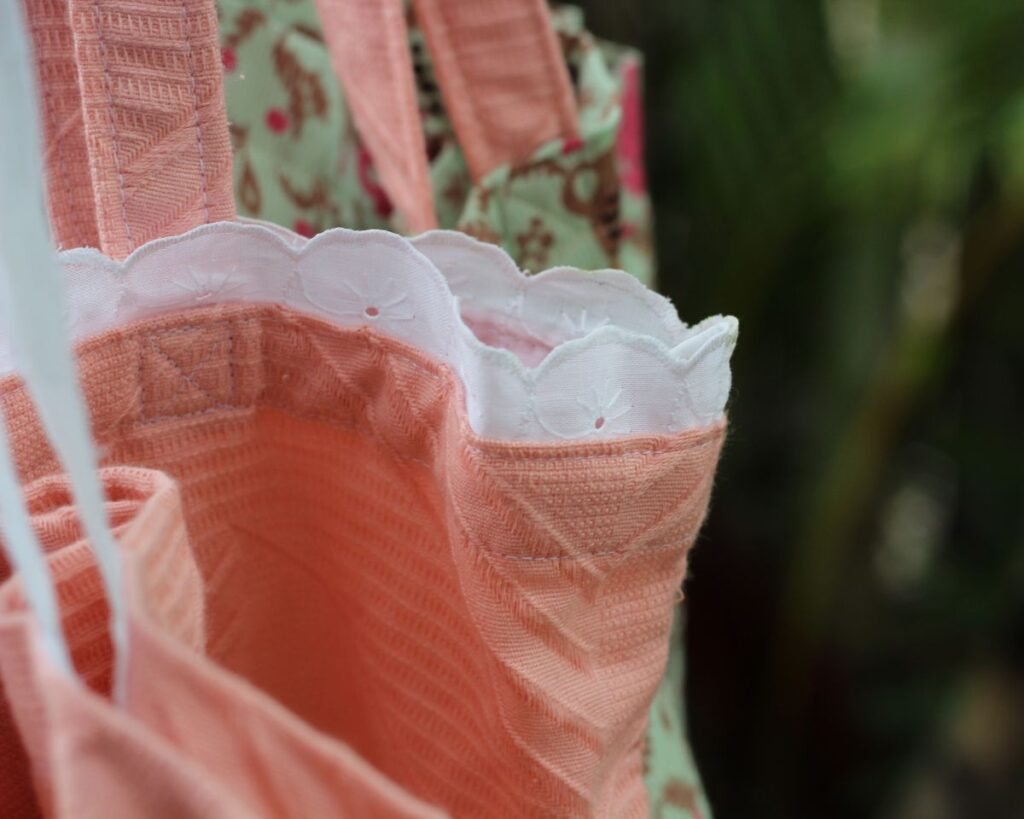
Adding design flourishes: You can make the totes even more eye-catching by playing with contrasting colours for the straps, or adding upcycled lace to the top hem so it adorns the top of your bag.
Admittedly, my first shoulder tote bag did take a couple of hours to make as I figured out the details. But my second and third attempts were much quicker and much neater, too.
I’ve since learned to batch-create the totes, which makes them even quicker to make.
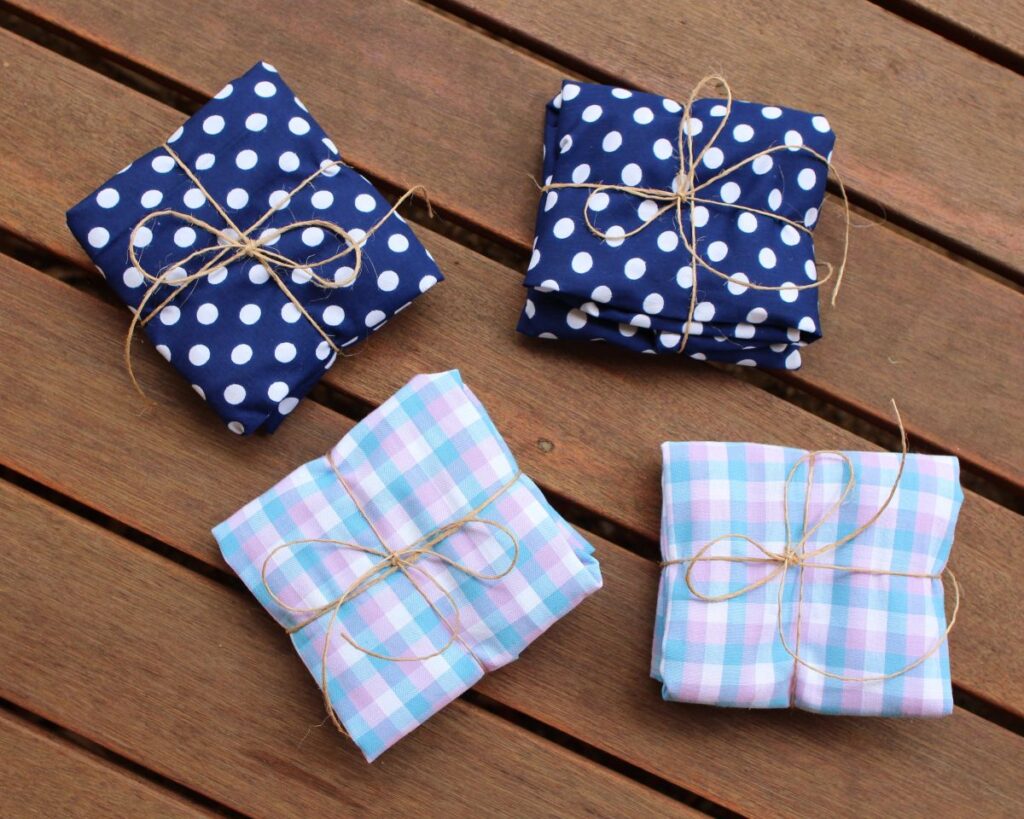
These handmade tote bags also make gorgeous gifts, folded up into squares and tied up with a bit of string. I hope you enjoy making them as much as I do.
Share this with your mates
About the Author: Koren Helbig

About the Author: Koren Helbig