In February 2021, I officially became a permaculture gardening and sustainable living columnist for the Australian Broadcasting Corporation, one of the country’s top-read news websites. Exciting!
I now write regularly about how to grow food and live more lightly in small urban spaces.
These stories share practical guides and lessons I’ve learned within my own Tarntanya / Adelaide garden (through trial and a whole heap of error). And yup, there’s always some permaculture themes woven in…
Below is a selection of recent stories, and you can browse my full column back-catalogue here.
My most popular ABC gardening stories
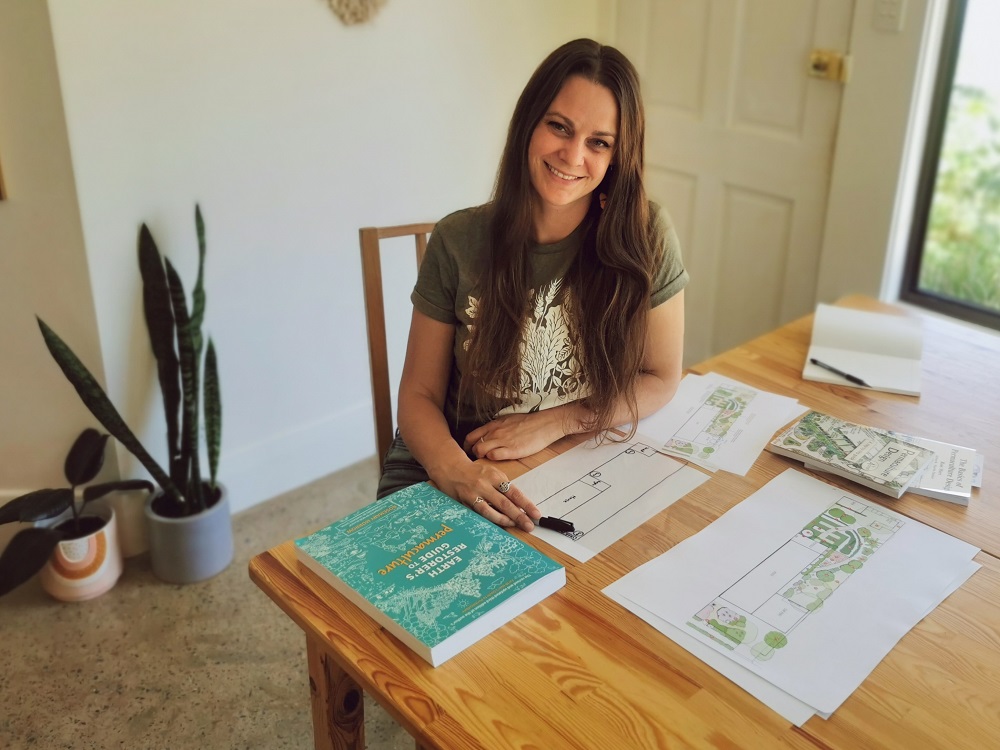
How I’m creating a food-producing paradise on my small city block
This summer, I tore apart my backyard ahead of a major makeover to create a food-producing permaculture paradise on my small city block. The idea was to invest time and energy in good planning up-front, creating a strategic garden design that will pump out heaps of organic food yet require increasingly less effort to maintain.
Understanding a few key permaculture concepts and jotting down a plan has proven crucial to guiding good design choices – and that same process might help you create a great garden, too, no matter how big or small your patch is.

To create the perfect butterfly garden, I filled my front yard with native plants
My front garden was once a sea of undulating shrubs bursting with bee-attracting flowers — until I decided to dig up and destroy the whole thing. My decision to raze the space, albeit temporarily, was made for the butterflies — to provide food for native butterflies and their caterpillars, to be exact.

Why I decided to grow veggies in straw bales — and fertilise them with pee
With my garden deconstructed amid renovations, I decided to experiment with a temporary measure: growing veggies in straw bales fertilised by human pee — yes, really. It was a way to grow food quickly and cheaply in a bed that could easily be removed once I’m ready to build my more permanent permaculture veggie garden.
The experiment was a huge success, with plenty of delicious organic veggies coming off the straw bales and into my kitchen.

How I sustainably renovated my house and saved money too
After buying a rundown 101-year-old bungalow, I decided to make only minor fixes to the place — because, in this age of climate change, I couldn’t stomach a “flip it” style renovation. Instead, and despite a modest renovation budget, I’ve been able to make smaller and more sustainable changes to help my home become more comfortable and energy-efficient.

Gardening doesn’t have to be overwhelming. Start by doing one thing a day
As I enter my second year of renovating my house and garden solo, I’ve been feeling a touch unenthused about all the decisions left to make and all the work still to go. So, to reinvigorate myself, I’m employing what I call the “one thing” rule: try to do just one thing each day.
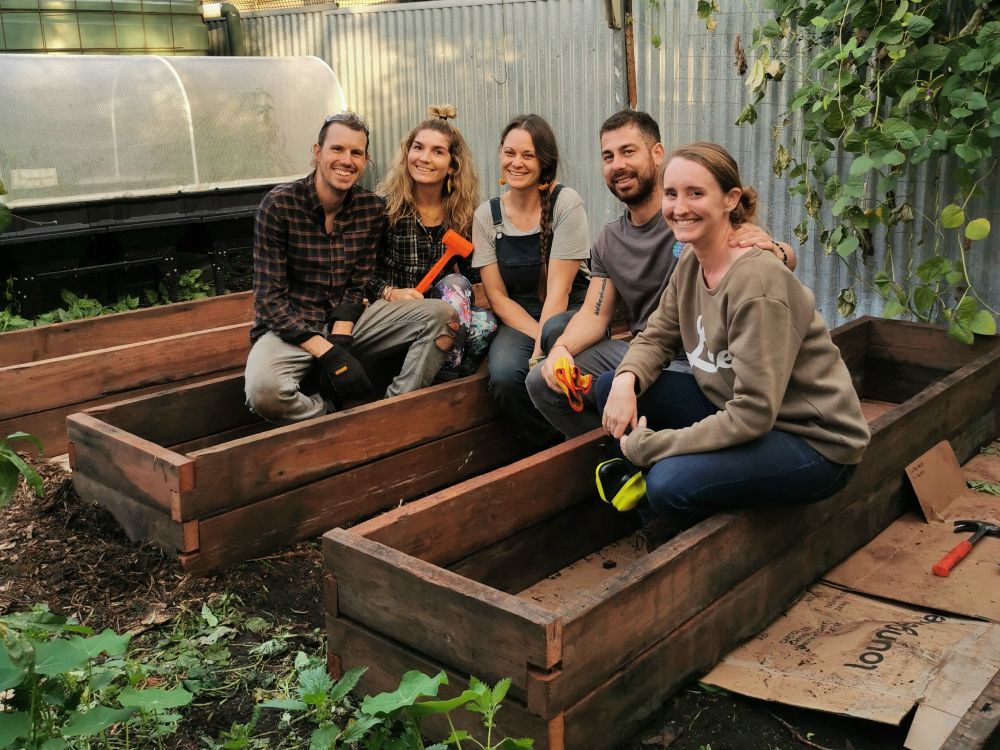
Tips for hosting a productive and fun garden working bee
Building my city permaculture garden over the past two years has been a lesson in learning to ask for help — uncomfortable as it felt, at first. Calling in friends, family and acquaintances allowed me to move forward with structural elements, such as my chicken pen fence, irrigation system and four low-raised veggie beds.
Here are key steps that ensured each garden working bee ran smoothly while everyone stayed safe and had fun.
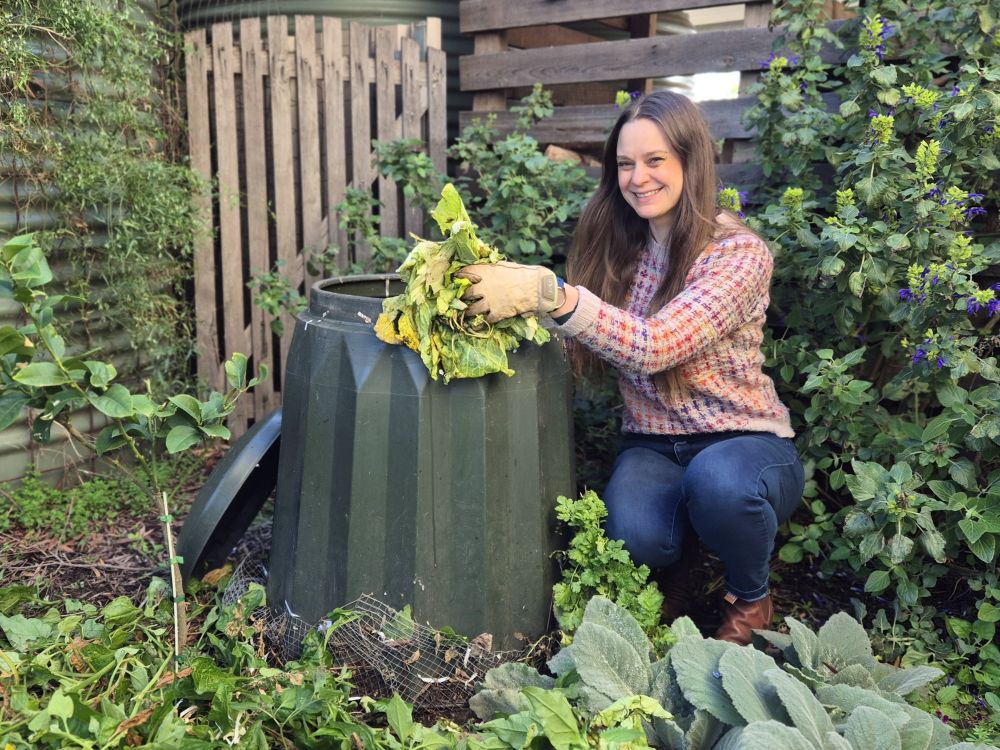
The simple system I use for composting
After five years using compost bays in my little city garden, I finally realised they were the main reason every batch of compost I made sucked. The open bays were a magnet for rats and cockroaches, and everything inside quickly dried out in Tarntanya/Adelaide’s often-hot weather, hampering the decomposition process.
I’ve since devised a simpler system that transforms my food scraps and plant prunings into “garden gold” – which I return to my veggie beds to feed my soil and grow plentiful organic food.
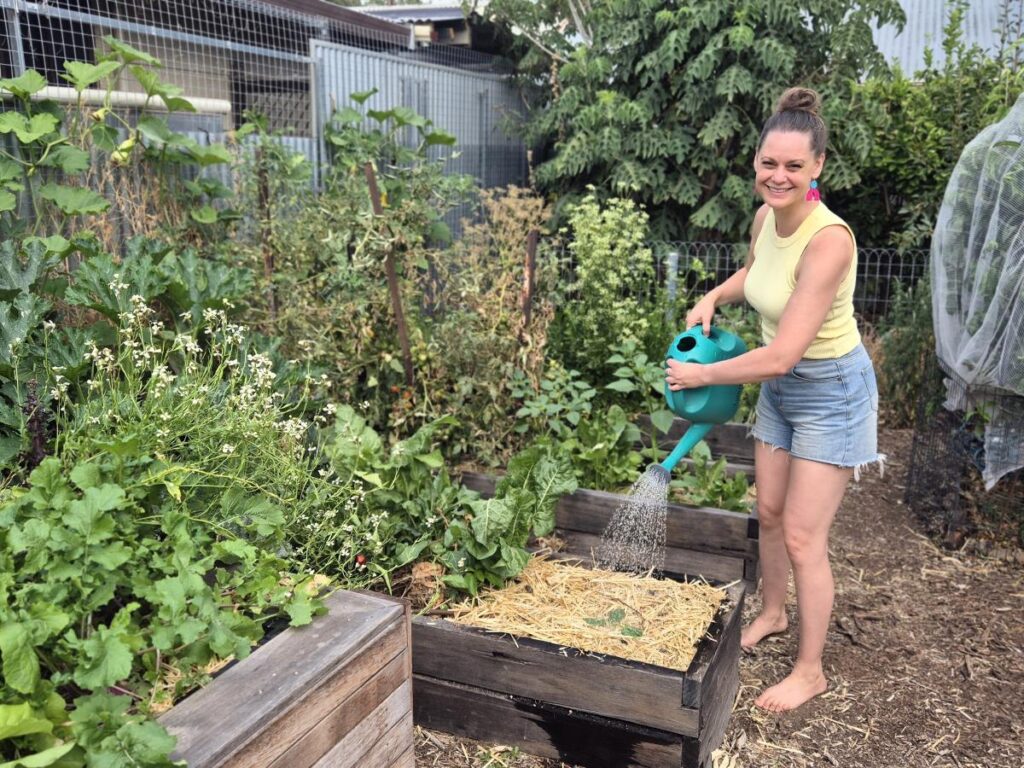
How I manage watering to maximise what I can eat from my garden
Water is very high up in a plant’s hierarchy of needs. So, knowing when and how much to water plants has been crucial to eating regularly from my garden — and has helped me double my summer harvests. Here are tips I’ve gleaned from learning to water effectively in South Australia — the driest state on the driest continent on Earth.

Cheap ways to protect your plants and garden from pests
Pests in the garden can be utterly infuriating and can ruin our careful planting and tending in one vicious fell swoop. Whether you’re growing indoors or out, prevention is often better than cure. Here are DIY measures I regularly use in my small city garden to help keep pests at bay — without breaking the bank or using chemicals.

Want to eat from your veggie patch each week? Try these strategies
Consistency can be one of the hardest arts to master as a new gardener. But, after much trial and error, I’m finally eating almost daily from my small city veggie patch. Here are five strategies I follow.
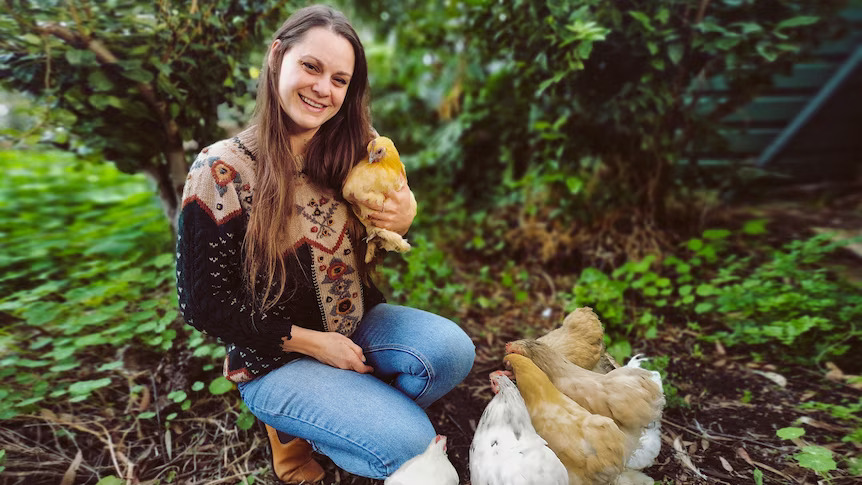
Spoil your flock without breaking the bank: Cheap ways to feed your chickens
My five little Pekin bantams are cherished pets and, in spoiling them with all sorts of extra food treats, I’ve realised I’m also saving money — because I don’t need to buy as much pelleted food. Turns out, supplementing your flock’s diet with homemade extras is super thrifty, and can also make their eggs more nutritious and delicious. With the cost of living starting to bite, here are some simple ways to feed your hens on the cheap.

How to use plants to keep your house cool during summer
After moving into a rental without air conditioning, I sweated through one blistering summer before realising I had to get creative — and learn to use plants to keep my house cool. Turns out strategically growing plants against certain windows and walls can help block heat and act as a kind of living air conditioner. A free one, at that.
Keen to read more? Browse my full story archive
I’ve written dozens of stories for ABC — you can browse my full ABC column archive here and see other journalism stories I’ve written here.
Big thanks to the ABC Lifestyle team and my editor, Sonya Gee, for giving me this excellent opportunity to share permaculture living and gardening skills with people across Australia.
Share this with your mates
About the Author: Koren Helbig

About the Author: Koren Helbig