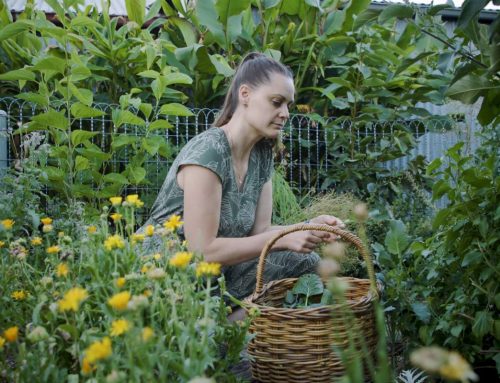
Back when I first began food gardening, my main focus was simply keeping a scraggly assortment of potted edibles alive – and that often felt like a struggle.
Over time, I’ve realised that thoughtful design – understanding how light, water and people move through a space – lets you shape a garden where nature does more of the work for you. That’s where permaculture comes in.
It’s a design system that helps you create abundance with less effort, using nature as your guide.
On my small city block of less than 500 square metres, I’ve used permaculture to turn a once-bare backyard into a leafy, edible urban oasis that now boasts more than 120 edible plants, plus local natives and flowers to support biodiversity.
The same ideas can be scaled to suit any city space, from a rented courtyard or balcony to a street verge or pots on your windowsill.
A feature story for Australia’s top natural gardening magazine
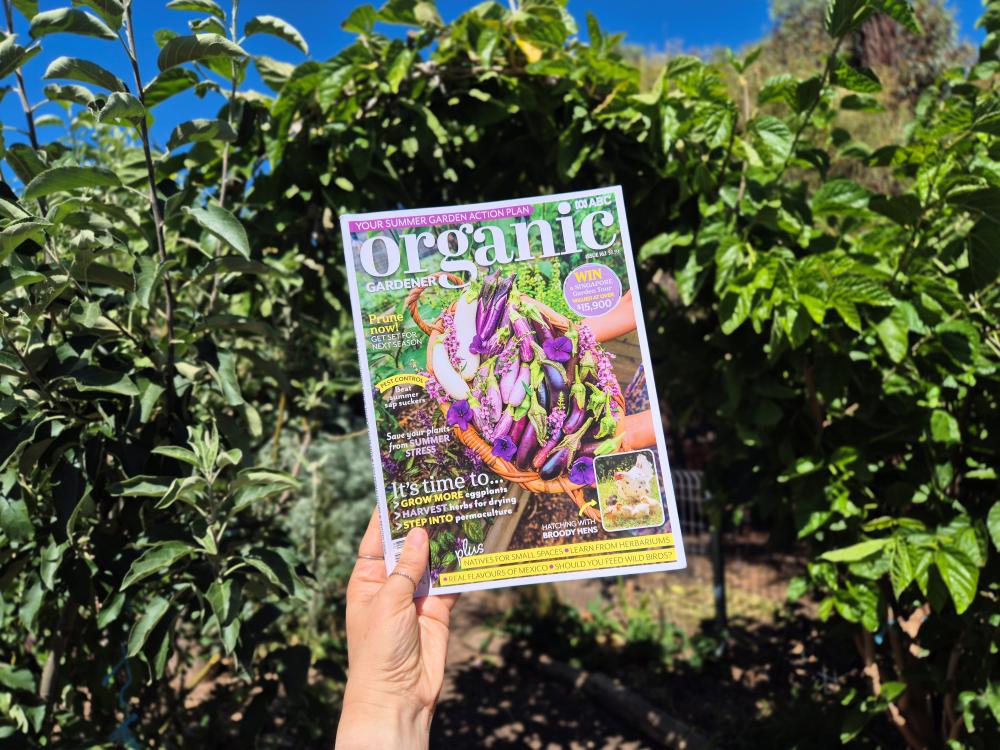
Recently, I was asked to write about my permaculture garden design process for the legends at Organic Gardener Magazine.
The resulting six-page feature story covers how to plan your own permaculture garden using my simplified four-stage design process: observe, design, implement, iterate.
The story also includes explanations of:
- How to sun map your urban space to decide where your edible garden should go.
- Using permaculture zones to decide what goes where, based on how often you use the plant or object.
- The benefits of prioritising perennials and mini food forests.
- A suggested reading list of extra resources.
Why use permaculture for city gardens?
Originally developed for farms and larger properties, permaculture has since been adapted for urban living. These days, the principles can be used in any type of garden, and are especially useful in small gardens:
- Good design makes best use of small areas.
- Simple way to grow healthy, local food.
- Saves time and money.
- Cooler, greener spaces = more resilience to heat.
- Requires increasingly less effort to maintain.
- Water-smart and pest-resilient.
Cities are the future, according to the United Nations, which predicts almost 70 per cent of the global population will live in urban areas by 2050. In Australia, we’re already there: around 9 in 10 of us live in cities.
Learning to live more sustainably in urban environments is an essential climate action, I believe – and permaculture provides a choose-your-own-adventure map for how to do it, in your garden and beyond.
Read the full Organic Gardener Magazine story
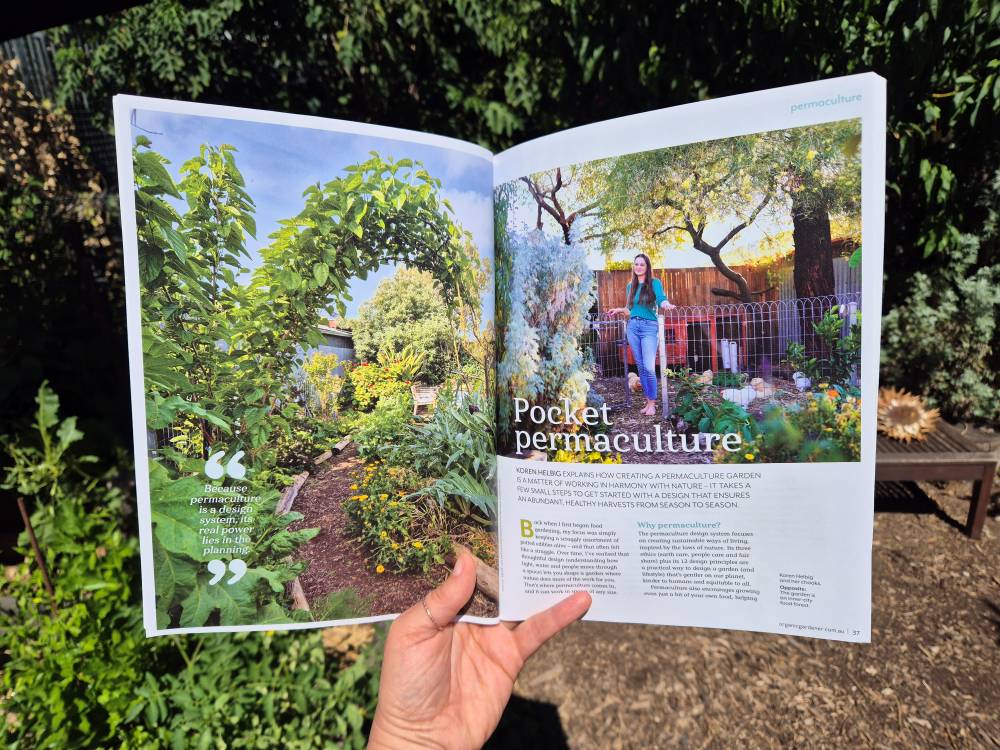
While I can’t share the full story with you here due to copyright, you can browse a snippet on Organic Gardener’s website here, and read the full story in the Summer 2026 magazine (issue number 162).
A big thanks to Organic Gardener Magazine and editor Chloe Thomson for having me in your pages and helping spread useful, practical information about permaculture gardening.
Share this with your mates
About the Author: Koren Helbig

About the Author: Koren Helbig